Call Easipoint at 📲 0407 270 527
When complex structural defects like concrete cancer, deteriorating facades, or failing fire compliance threaten your strata or commercial property, you need a highly qualified expert you can trust implicitly. Established as a family business in 1998, Easipoint is the premier remedial builder Sydney property owners and strata managers rely on for permanent, compliant structural solutions. Operating with a full Class 2 Builder License (186400C | ABN: 42526896836), we possess the legal authority and specialized expertise required to execute high-stakes, multi-story building repairs under the strictest NSW Design and Building Practitioners (DBP) regulations. From targeted concrete spalling repairs to comprehensive facade upgrades, choosing our fully licensed team ensures your property’s safety, value, and structural integrity are completely restored without cutting corners.
What Does a Remedial Builder Actually Do?
A remedial builder is a construction specialist trained to diagnose and permanently correct defects that compromise a building’s safety, compliance, or structural performance — as distinct from a general builder, whose focus is new construction, renovations, or cosmetic works. Where a general contractor might patch a visible crack or repaint a stained wall, a remedial builder investigates why the defect occurred in the first place: is water tracking through a failed membrane, has reinforcing steel begun to corrode inside the concrete, has a facade lost its weatherproofing integrity, or has the building settled unevenly? Getting that diagnosis right is what separates a repair that lasts decades from one that needs redoing within a few years.
Why This Distinction Matters Under NSW Regulation
Since the introduction of the NSW Design and Building Practitioners (DBP) Act, remedial and structural work on Class 2 buildings — meaning multi-unit residential and strata properties — carries formal compliance obligations that don’t apply to general residential trades. Declarations, documentation, and registered practitioner sign-off are required at various stages of the work. Engaging a builder who isn’t licensed and experienced under this framework doesn’t just risk a poor repair; it risks a non-compliant one that a strata committee, insurer, or future purchaser’s building inspection can flag. This is precisely why our Class 2 Builder Licence isn’t a formality — it’s the legal basis that allows us to take on this category of work at all.
Common Structural Defects We Diagnose and Repair
Sydney’s building stock — from Federation-era terraces to 1970s brick veneer to modern strata towers — is exposed to a coastal climate that accelerates almost every category of structural defect. The remedial work we’re most regularly engaged for includes:
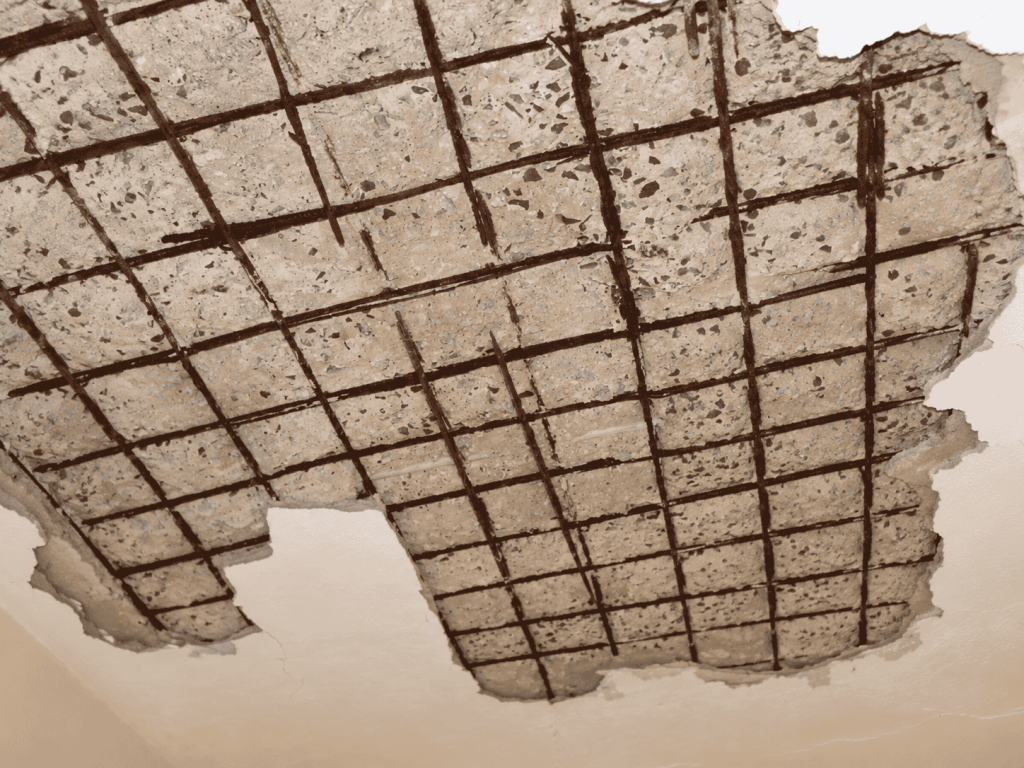
- Concrete cancer and spalling — corrosion of embedded steel reinforcement that expands and cracks the surrounding concrete, common in balconies, columns, and external walkways
- Facade deterioration — render cracking, delamination, and water ingress through building envelopes, particularly on older strata blocks
- Water ingress and waterproofing failures — leaking balconies, basements, and roof membranes that lead to internal damage if untreated
- Structural cracking and movement — wall or foundation cracking caused by ground movement, poor original construction, or long-term water damage
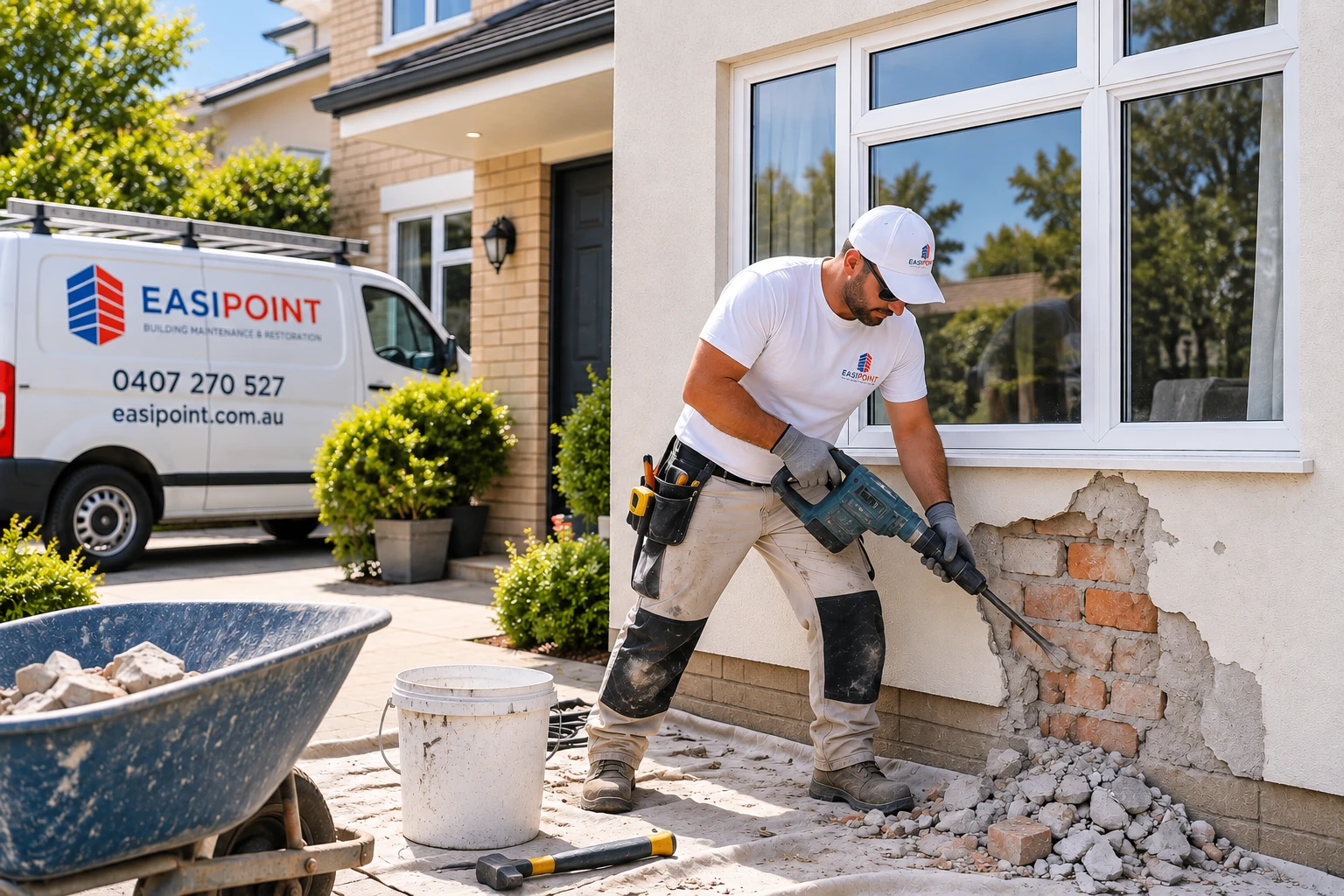
- Brickwork and mortar failure — crumbling or hollow mortar joints and spalling brick faces that compromise a wall’s weatherproofing
- Fire compliance defects — non-compliant fire-rated elements identified during essential services audits or building certification reviews
Each of these can appear as a minor cosmetic issue on the surface while masking a much more serious underlying problem — which is exactly why proper diagnosis matters more than a quick patch.
Our Remedial Building Process
Every project we take on, whether it’s a single strata unit or a full building rectification, follows the same structured sequence.
Step 1: On-Site Assessment and Defect Diagnosis
We begin with a thorough physical inspection of the affected areas, identifying the underlying cause of each defect rather than just its visible symptoms. For concrete issues, this includes assessing the extent of reinforcement corrosion; for water ingress, tracing the actual path moisture is taking through the building envelope.
Step 2: Engineering and Compliance Review
For structural or Class 2 work, we review any existing engineering reports and ensure the proposed scope satisfies DBP Act documentation requirements. Where a defect report has already been prepared by an engineer or building consultant, we work from it directly and deliver the scope exactly as specified.
Step 3: Transparent Scoping and Quotation
You receive a clear, itemised scope of works and a fixed quote before anything begins — including the reasoning behind the recommended approach, expected timeline, and any staging required for occupied buildings.
Step 4: Rectification Works
Repairs are carried out using materials and methods matched to the building’s construction and compliant with current building standards. For occupied strata and commercial properties, this includes minimising disruption to residents, tenants, or business operations through clear scheduling and communication.
Step 5: Quality Assurance and Sign-Off
Completed work is inspected against the original scope and compliance requirements before handover, with documentation provided for strata records, insurance purposes, or future building reports.
Remedial Builder vs General Builder: What’s the Difference?
This is one of the most common questions we get from strata managers and homeowners alike. A general builder is licensed and equipped for construction, renovations, and extensions — building something new or reconfiguring an existing space. A remedial builder Sydney property owners hire is specifically trained and, for Class 2 buildings, specifically licensed to diagnose and correct existing defects: identifying root causes like water ingress, concrete deterioration, or structural movement, and delivering a permanent fix rather than a cosmetic one. The two disciplines can overlap, but engaging a general builder for genuine remedial defect work — particularly concrete cancer or facade rectification on a strata property — can mean the underlying cause is missed and the repair fails again within a few years.
Why Strata Managers and Property Owners Choose Easipoint
Licensed for Class 2 Residential and Strata Work
Our Class 2 Builder Licence (186400C) means we’re legally qualified to carry out structural and remedial work on multi-unit strata buildings under the NSW DBP framework — a higher compliance bar than standard residential trades operate under. For strata managers, that licensing detail is what protects the committee from liability down the track.
A Sydney Family Business Since 1998
As one of the most established remedial building companies Sydney has to offer, Easipoint has operated as a family-run business since 1998, giving us direct, long-term familiarity with how different eras of local building stock behave over time — from heritage terraces to mid-century apartment blocks to newer strata developments.
Multi-Trade Capability Under One Roof
Remedial defects rarely occur in isolation — a failing facade often involves brickwork, waterproofing, and concrete repair together. Alongside our core remedial building services Sydney properties require, Easipoint delivers brick repairs, brick repointing, concrete repairs, waterproofing, and repainting, meaning a multi-faceted defect can be scoped and delivered by one accountable team rather than coordinated across several separate contractors.
Diagnosis-First, Not Patch-First
We identify and correct the underlying cause of a defect — whether that’s a failed membrane, corroding reinforcement, or trapped moisture behind a hard cement render — rather than covering the visible symptom. This is what determines whether a repair lasts for decades or needs revisiting within a few years.
Transparent Communication From Assessment to Handover
You’ll understand what we’ve found, what’s recommended, why, and what it will cost before work begins, with clear documentation provided throughout — essential for strata committee approvals and insurance records.
Areas We Service Across Sydney
Easipoint carries out remedial building work across Greater Sydney, including the Eastern Suburbs, Inner West, and North Shore, with particular experience across strata properties, heritage terraces, and commercial buildings in coastal and high-exposure locations where water ingress and salt-driven deterioration are most common. If your property falls outside these areas, get in touch — we service the wider Sydney metropolitan region for both residential and strata remedial work.
Frequently Asked Questions
What is a remedial builder, and how is it different from a general builder? A dedicated remedial builder Sydney locals rely on specialises in diagnosing and permanently repairing existing structural defects — such as concrete cancer, water ingress, or facade failure — rather than new construction or cosmetic renovation. For Class 2 buildings, this work also requires specific licensing under the NSW DBP Act.
How do I know if my strata building needs remedial work? Common warning signs include cracked or spalling concrete on balconies and columns, water staining or damp patches on internal walls, cracking render or facade, and rust staining around reinforcement or wall ties. An on-site assessment will confirm the cause and scope.
Do you work from an engineer’s defect report? Yes. Where an engineering or building consultant’s report has already been prepared, we price and deliver the scope exactly as documented, working alongside the engineer where required.
Are you licensed for strata and commercial remedial work? Yes. Easipoint holds a full Class 2 Builder Licence (186400C), which covers multi-unit residential and strata buildings under NSW’s Design and Building Practitioners regulations.
How long does a remedial building project take? This depends entirely on scope — a targeted concrete repair might take a few days, while a full facade rectification on a strata building can run several weeks to months. You’ll receive a clear timeline as part of your quote, following the on-site assessment.
Can remedial work be carried out while a building is occupied? Yes. We regularly deliver remedial works in occupied strata and commercial buildings, scheduling and staging the work to minimise disruption to residents, tenants, or business operations.
Protect Your Property’s Structural Integrity and Value
Structural defects rarely improve on their own — left unaddressed, issues like concrete cancer, facade deterioration, or water ingress tend to escalate, becoming more expensive and more disruptive to fix the longer they’re left. With full Class 2 licensing, DBP Act compliance, and a Sydney family business operating since 1998, Easipoint is equipped to diagnose the real cause of your building’s defects and deliver a permanent, compliant repair.
Get in touch with Easipoint today for an on-site assessment and a clear, no-obligation quote for remedial building services across Sydney.
- Direct Phone: 0407 270 527
- Email: greg@easipoint.com.au
- Enquire Online: Request a Free Site Inspection & Detailed Quote